


Kung Fu
My Training Journey to China
My name is Jonas Foglszinger, and I am 19 years old.
I had known for quite some time that I wanted to go to China and train Kung Fu. So, during the last two years of school, I also spent time looking for a suitable school. Like most people, I found the internet to be the best place to start. After looking at several schools and their websites, I decided on Yuntai Mountain International Culture and Martial Arts School.
What mattered most to me was that there was enough information available and that I had the opportunity to ask further questions.
Eventually, I had organised everything and flew to China on 25 July 2013 (about one month after finishing my school-leaving exams and three days after my 19th birthday). When I arrived, the school director personally picked me up at the airport, just as promised, and took me to the school without any problems. I arrived there at 3 am.
There was no training for me the following day, as I had been awake for around 60 hours in total. But after that, things really got started! First, I had to decide whether I wanted to train Kung Fu, Tai Chi or Sanda. In my case, the decision to study Kung Fu had already been made.
From then on, early mornings became part of everyday life (the first training session starts at 5:40 am).
A significant part of the training here consists of running. And no, I don’t mean walking, but jogging! Apart from that, you practise acrobatic exercises such as backflips, kicks and, of course, Kung Fu with everything that goes along with it.
Almost all the training takes place outdoors.
The new school building is expected to be completed next year.
The first week in particular is extremely tough. If you don’t experience muscle soreness, you have definitely done something wrong! In the evening, everyone is glad to retreat to their room and rest after training.
In summer, however, this can be quite difficult. With room temperatures normally above 30°C and fairly high humidity, not everyone finds it easy to sleep.
Another important topic is the food. It is not quite like what you would get in a Chinese restaurant. Personally, I think the food at the school is actually pretty good. It tastes good, and you don’t get diarrhoea from it (please note that restaurant meals are not included).
The bigger problem is the lack of variety. Almost everyone here buys oats and milk to have an alternative breakfast, or simply something different to eat between meals.
It is also worth considering additional supplements such as magnesium, calcium or a combination product like “Frubiase”. Otherwise, the most important thing you need to bring with you is motivation. With that, anyone can make it here. Of course, good physical fitness and some previous experience are an advantage, but it is possible even without them.
Some knowledge of Chinese is definitely helpful and, in my opinion, highly recommended. If you take Kung Fu classes, you will be assigned one of the two English-speaking trainers (and their English really is good enough). However, if you choose Sanda or Tai Chi, communication in English is more difficult. In theory, you can get by without speaking Chinese, but knowing the language definitely makes life easier.
Unfortunately, I cannot compare this school with others, but I hope my account gives you a sufficiently accurate picture. If you are thinking about coming here, I can only recommend the school. Of course, a comfortable holiday looks different, but you come here to train, not to lie on the beach!
Thank you, Jonas!
We look forward to welcoming you back in the near future.

 Russia · 1 month

 Brazil · 1 month

 France · nearly 6 months
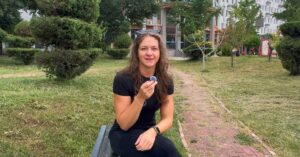
 Germany · 3 months
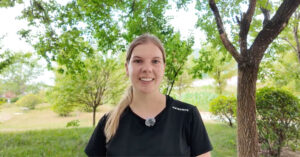
 Switzerland · 5 weeks

 New Zealand · 3 months


