


When thinking of Kung Fu, people usually think of kicks, fists, and impressive acrobatics first. But the real strength that students develop in Shaolin training is not shown on the training mat — but in real life: in stressful meetings, in difficult conversations, in moments when you would love to give up. In this article, you will learn how Kung Fu builds mental strength and discipline, the psychological mechanisms behind it, and how you can integrate these principles into your life even without daily training.
Why Mental Strength Is So Important in Kung Fu
What Is Mental Strength, Really?
Mental strength is often confused with toughness with the ability to grit your teeth and push through. In Shaolin Kung Fu, mental strength means something more comprehensive: the ability to consciously direct your own mind, even when the body is exhausted, the mind gets loud, or the situation is uncomfortable. It is not about suppressing feelings, but about recognizing them, understanding them, and still being able to act clearly.
That is precisely where the difference from pure willpower lies: willpower is a limited effort against resistance. Mental strength, as taught in Kung Fu, is a trained state, something that becomes more effortless over time, much like a muscle that becomes more resilient through repeated training.
The Difference Between Body and Mind Training
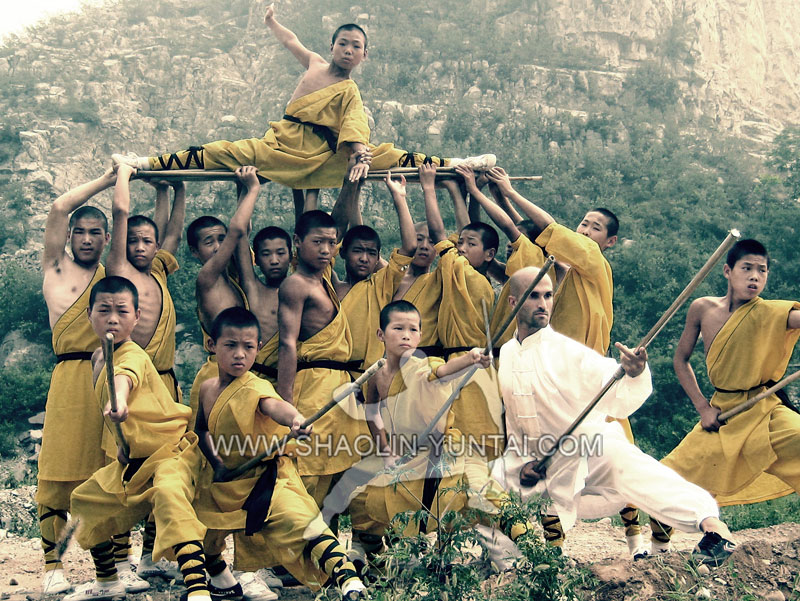
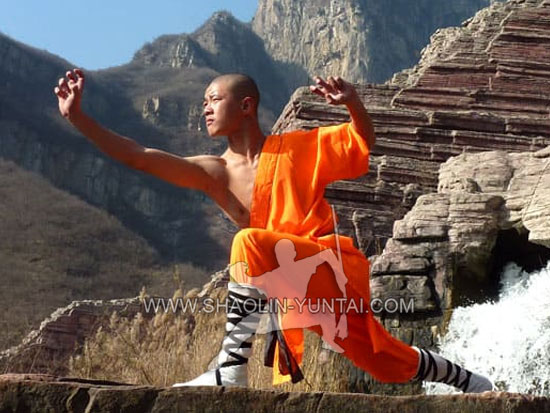
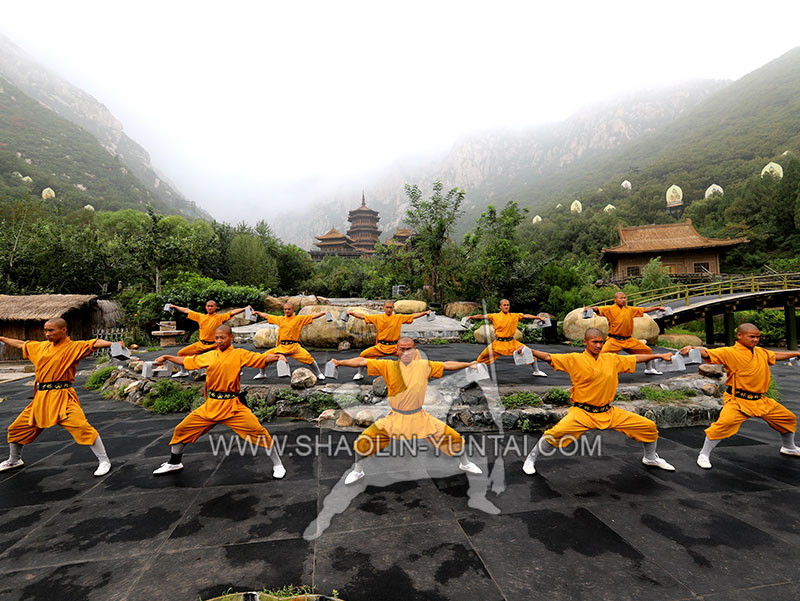
In traditional Shaolin Kung Fu, body and mind were never viewed separately. The Shaolin monks always understood their training as a unity of physical exercise and mental cultivation. Anyone who repeats the same movement for hours trains not only muscles and coordination, but above all patience, focus, and dealing with their own inner voice, which eventually says: “Stop, that’s enough.”
This separation between “physical training here” and “mental training there” is much more widespread in the West than in traditional Kung Fu. That is precisely what makes Kung Fu such an effective tool for mental development: the body becomes a training device for the mind.
Discipline in Shaolin Kung Fu — The Foundation of Everything
Wu De — The Warrior Virtues
At the center of mental training in Kung Fu is the concept of Wu De — The Art of the Warrior: Virtues for a Fulfilling Life. Wu De describes a set of values that students should align themselves with — including humility, respect, righteousness, trust, as well as endurance and willpower. In this way of thinking, discipline is not an end in itself, but the practical implementation of this inner attitude in everyday life. Anyone wishing to dive deeper into this concept can find all virtues explained in detail in our detailed article on Wu De.
A student who arrives on time, works hard even when no one is watching, and treats teachers and training partners with respect is practicing something far more fundamental than pure politeness: they are practicing staying true to their own standards, regardless of external circumstances.
Why Discipline Does Not Mean Coercion
A common misconception is that discipline means forcing yourself. In the Shaolin understanding, discipline is rather a tool of freedom: someone who is disciplined does not have to decide whether to keep going at the moment things get uncomfortable. The decision was made long ago through habit, through repeated practice, through inner alignment.
Paradoxically, this takes the pressure off. You don’t have to renegotiate with yourself every day whether you train, whether you endure, whether you stick with it. Discipline becomes an autopilot function that relieves the mind of constant decisions of will.
How Discipline Is Built in Training
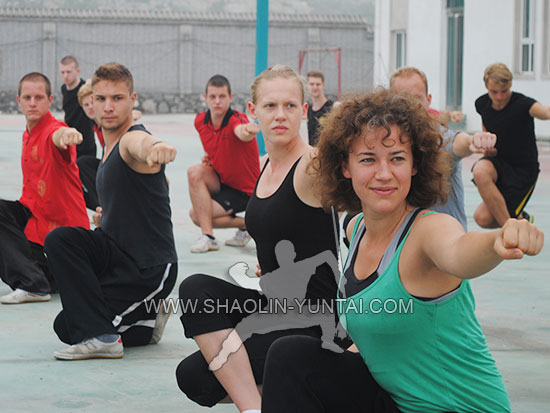
During training at our school, students experience discipline on several levels simultaneously:
- Structure: Fixed training times, clear routines, and recurring rituals create a framework in which discipline emerges almost automatically.
- Repetition: Performing the same movement hundreds or thousands of times trains the ability to remain focused even amidst monotony.
- Small, daily demands: It is not the big, dramatic challenges that build discipline, but the small, unspectacular decisions getting up even though you’re tired, doing one more repetition even though your muscles are burning.
- Experiencing consequences: Anyone who trains carelessly feels it in their own progress. This direct feedback makes discipline tangible and understandable.

"A tree firmly rooted in the ground can withstand even the strongest storms."
How Kung Fu Specifically Trains Mental Strength
Repetition and Frustration Tolerance
A Kung Fu form (Taolu) is not mastered perfectly after just a few attempts. Students practice sequences of movement for weeks and months, often feeling like they are making no visible progress. Exactly this process trains frustration tolerance: the ability to endure a state of imperfection without giving up or falling into self-criticism.
Studies in sports psychology show that exactly this experience (repeated practice despite the lack of visible success) is one of the most effective methods for building perseverance (often called “grit” in English).
Dealing with Pain and Limits
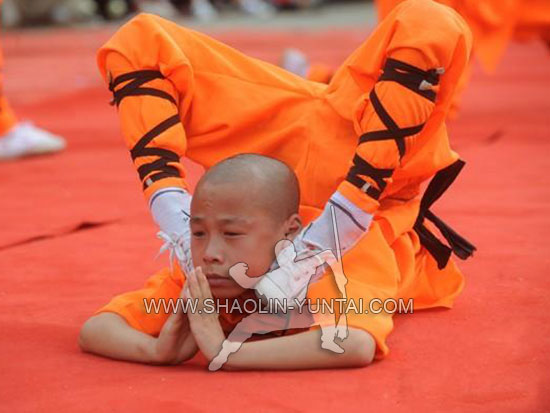
Shaolin Kung Fu includes physically demanding elements: flexibility training, strength training, endurance sessions. In doing so, students learn to recognize the difference between uncomfortable but safe discomfort and actual pain. This ability to push to one’s own limits in a controlled manner without crossing them is a core mental competency. It transfers directly to everyday situations where one must also learn to endure discomfort without panicking or resorting to avoidance.
Meditation and Mindfulness as Tools
Meditation and mindfulness are not optional extra offerings in Shaolin Kung Fu, but an integral part of mental cultivation. Through regular meditation, students learn to observe thoughts and emotions without immediately being carried away by them. This ability of inner distance from one’s own reactions is the foundation of any form of emotional self-control.
Breathing and the Nervous System
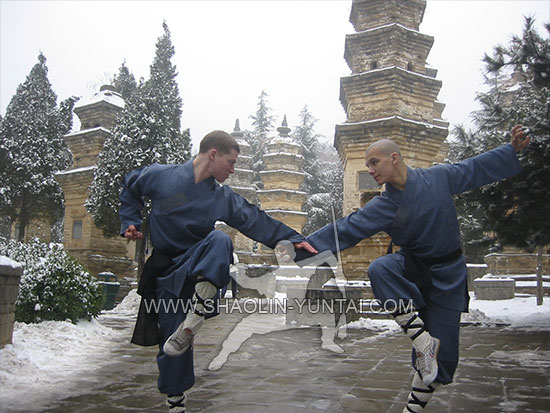
An often underrated aspect: In Kung Fu, and especially in Qi Gong, conscious breathing is systematically trained. Controlled, deep abdominal breathing activates the parasympathetic nervous system. The part of the nervous system responsible for rest and recovery. As a result, students learn to actively influence their own nervous system instead of passively enduring stress responses. This ability is one of the most practical tools that can be directly transferred to stressful everyday situations.
The Psychology Behind It
Several concepts from modern psychology explain why martial arts training is so effective for mental strength:
| Concept | What It Means |
|---|---|
| Stress Inoculation | Controlled, repeated confrontation with moderate stress makes the nervous system more resilient, much like a vaccination trains the immune system. |
| Growth Mindset | The constant experience of getting better through practice reinforces the belief that abilities can be trained. |
| Delayed Gratification | Progress often only becomes visible after months or years. Those who stick with it anyway train one of the strongest predictors of long-term success. |
| Embodied Cognition | Posture and movement have been proven to influence mental state. A stable posture also impacts self-confidence and stress processing. |
Seven Mental Skills Developed in Training
1. Focus & Concentration
When executing a complex form, you cannot think about your cell phone on the side. Kung Fu forces complete presence in the moment. A skill that is becoming increasingly valuable in a world filled with distractions.
2. Emotional Self-Control
In training (especially in sparring) frustration, fear, or anger arise. Students learn to perceive these emotions without reacting impulsively.
3. Perseverance (Grit)
Progress in Kung Fu is not linear. Learning to train through plateaus and setbacks builds one of the most valuable traits of all: the ability to stick to a long-term goal.
4. Self-Confidence
Every mastered technique and every overcome limit is tangible proof of one’s own abilities. Not an abstract feeling, but experienced competence.
5. Dealing with Fear
In sparring or with acrobatic elements, students directly face the fear of injury or failure. Anyone who learns to act in a controlled manner despite fear transfers this skill to any other fear-inducing situation in life.
6. Resilience After Setbacks
Falls, mistakes, lost sparring rounds all of this is part of training. The ability not to let this discourage you, but to keep going, is resilience in its purest form.
7. Self-Awareness
Through the close connection of body and mind in training, students develop a fine sense for when they are truly exhausted and when inner resistance is merely a temporary hurdle.


All-inclusive Full-time Training
Our all-inclusive full-time training allows you to learn quickly and improve your skills in the shortest amount of time possible. We train in small groups for 6 days a week and over 6 hours per day.
Learn more about our trainingHow This Transfers to Your Real Life
Career and Profession
The ability to stick with difficult projects even when success is not immediately visible is worth its weight in gold in professional life. Anyone who has learned to handle setbacks in training won’t be thrown off track by a failed presentation or a difficult client.
Relationships
Emotional self-control — one of the core competencies from training — directly impacts conflict resolution skills. Anyone who has learned to stay calm in stressful training situations will also react more thoughtfully rather than impulsively in a difficult conversation with a partner or family member.
Daily Stress Management
The breathing techniques learned in training can be applied directly to everyday situations: before an important presentation, in a tense discussion, or simply during a hectic day.
Decisions Under Pressure
Martial arts training simulates immediate, physical pressure situations. Anyone who has learned to think clearly under this pressure will also transfer this skill to decisions in professional or personal life where time pressure or stress is involved.
Practical Exercises for Mental Strength — Even Without Kung Fu Training
Even if you are not (yet) training with us in China, you can integrate key principles from Shaolin Kung Fu into your daily life:
- Standing Meditation (Zhan Zhuang): Stand shoulder-width apart, knees slightly bent, arms as if hugging a tree. Hold this position for 3–5 minutes while maintaining calm, deep breathing. This exercise originating from Qi Gong directly trains the ability to endure physical discomfort without losing mental composure.
- The 4-4-4 Breathing: Inhale for 4 seconds, hold your breath for 4 seconds, exhale for 4 seconds. Repeat this 5–10 times. This simple technique (often used in training before strenuous exercises) calms the nervous system in seconds.
- Daily Micro-Discipline: Choose a small, uncomfortable task to complete at the same time every day regardless of motivation or mood. This trains the exact autopilot discipline that is so central in Kung Fu.
- Consciously Sitting with Discomfort: Sit down consciously for a few minutes without distractions, and simply observe which thoughts and impulses arise. This trains the skill, so vital in training, of observing inner reactions instead of immediately reacting to them.
- The 1% Rule: Don’t demand perfection from yourself right away. Instead, focus on making a tiny improvement every day just like a Kung Fu student who continues to refine a form over months.

Did you know?
Some Shaolin Kung Fu techniques were developed based on the movements of animals that were studied and imitated by the monks to improve their martial arts skills.
Common Mistakes When Building Mental Strength
- Wanting too much at once: Mental strength comes from small, repeated practice and not from one-time, extreme efforts.
- Confusing discipline with self-punishment: Beating yourself up for every setback doesn’t build discipline; it builds fear of failure.
- Measuring progress only by external success: Mental strength often shows up first in small, invisible moments such as the decision to keep going despite fatigue.
- Ignoring breaks and recovery: Even in Shaolin training, regeneration is part of the process. Without rest, discipline quickly turns into exhaustion.
- Trying to train alone: Structure, community, and an experienced teacher make building discipline considerably easier which is why guided training is so effective.
Conclusion: Mental Strength Can Be Trained
Mental strength does not happen overnight, nor can it be forced. It grows where people are willing to face the same movement, the same challenge, and the same inner resistance time and again until it becomes habit. That is the real lesson of Shaolin Kung Fu: discipline is not a character trait that some people have and others do not. It is a skill that can be built step by step, in training as well as in everyday life.
Anyone who regularly practices dealing with setbacks, controlling their breath, and staying focused despite discomfort changes more than just their body. They change the way they react to pressure, stress, and uncertainty, and that reaches far beyond the training mat. Whether at work, in relationships, or in quiet moments of daily life: the mental strength developed in Kung Fu accompanies you everywhere.
In the end, what matters less is how fast you make progress, but whether you are willing to stick with it. That is where the real strength lies.
Would you like to experience yourself how Shaolin Kung Fu builds mental strength and discipline? Learn more about our all-inclusive training or apply now without obligation.

FAQ
Do I already need to be mentally strong to start Kung Fu?
No, quite the opposite. Mental strength is not a prerequisite, but the result of the training. Most students only develop these skills through regular practice.
How long does it take to feel mental changes?
Many students report feeling more inner calm and focus in daily life after just a few weeks. Deeper changes, such as stable self-confidence or emotional composure, usually develop over several months of continuous training.
Is mental training in Kung Fu the same as meditation?
Meditation is an important component, but not the only one. Mental strength in Kung Fu arises from the interplay of physical challenge, repetition, breathwork, and meditation.
Can Kung Fu help with stress or anxiety?
Many students report that regular training helps them handle daily stress better. However, Kung Fu is not a substitute for professional treatment for severe anxiety or mental illness — professional advice should always be sought for serious conditions.
Is the training suitable for people who previously lacked discipline?
Yes, it is often particularly effective for them. The clear structure and guidance from experienced teachers take away much of the burden of having to motivate yourself — discipline arises externally at first, until it becomes an inner habit.
What is the difference between discipline and motivation?
Motivation is a feeling that comes and goes. Discipline is a trained habit that works independently of your current mood. In Kung Fu training, discipline is intentionally built instead of motivation because it is significantly more reliable.

