


In a world overflowing with knowledge, opinions, and explanations, the Daoist concept of Wu Zhi might seem contradictory at first. Why would not-knowing be a path to clarity and wisdom? Daoism doesn’t ask this provocatively, but quietly. Wu Zhi invites you to ease your mind, question fixed ideas, and meet reality more directly.
Wu Zhi – What Daoism Really Means by Not-Knowing
Wu Zhi (無知) is often misunderstood because the concept immediately triggers resistance in Western thought. Not-knowing sounds like incapability, lack of education, or conscious refusal to gain insight. In Daoism, however, Wu Zhi means something entirely different. It describes a state in which a person does not cling to their knowledge. Knowledge exists, but it does not become a filter through which every experience is pressed.
Daoism observes very closely how quickly knowledge becomes identity.
“I know how things are.”
As soon as someone says this, their perspective narrows. Situations are no longer perceived, but categorized. People are no longer seen, but judged. Wu Zhi intervenes exactly here. It is the ability to repeatedly let go of your own knowledge in order to approach life freshly.
Zhuangzi conveys this attitude indirectly in one of his stories when he essentially says that a vessel is useful because of its empty space. It is not the content that makes it useful, but what remains open. Wu Zhi is this inner space—a space in which the principle of Zi Ran is also effective: the natural unfolding of things without forced control.
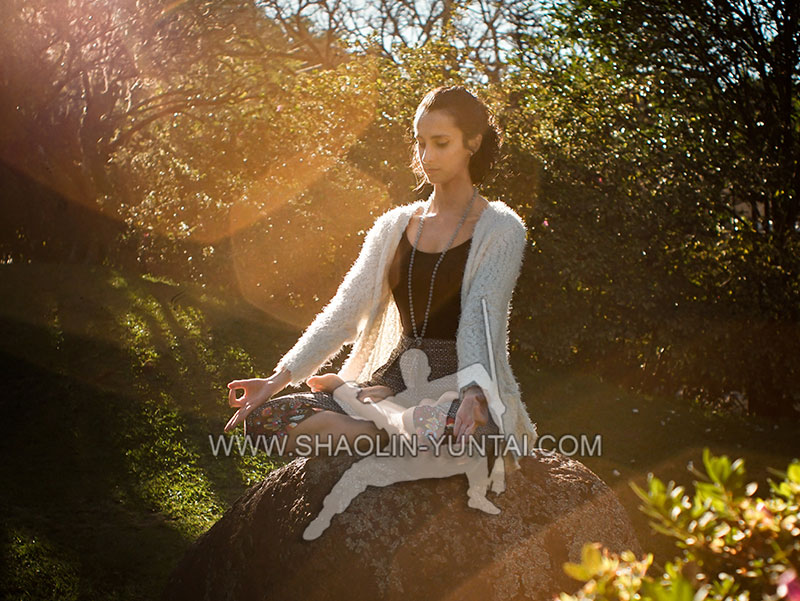

Not-knowing is not a deficiency, but a key to wisdom.
Letting Go of Knowledge Doesn’t Mean Knowing Nothing
A common misconception is that Wu Zhi is a state before learning. In truth, it goes beyond that. A child knows little, but it does not live in Wu Zhi. It lacks conscious openness. Wu Zhi only arises when knowledge is present but does not dominate.
A Simple Everyday Example
An experienced professional approaches a problem with a fixed solution in mind. They only see what fits their theory. A less experienced person asks naive questions and suddenly notices a crucial connection. Wu Zhi here is not ignorance, but non-fixation.
Laozi says in the Dao De Jing:
“He who learns, increases daily. He who follows the Dao, decreases daily.”
This doesn’t mean losing skills, but shedding the unnecessary mental baggage. Living this way develops Wu De, the quiet inner strength that comes from integrity and character. If you want to learn more about the practical application of Wu De, feel free to check out our article “Wu De – The Art of the Warrior: Virtues for a Fulfilling Life“.
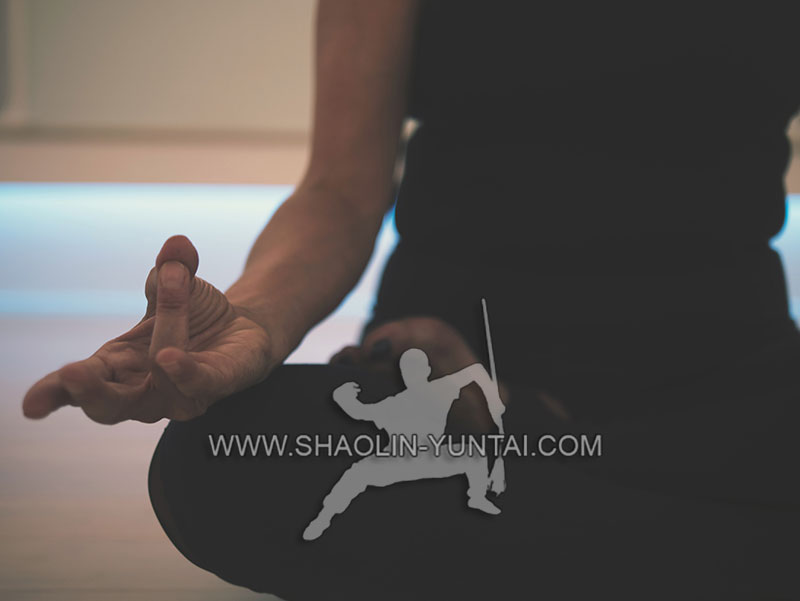
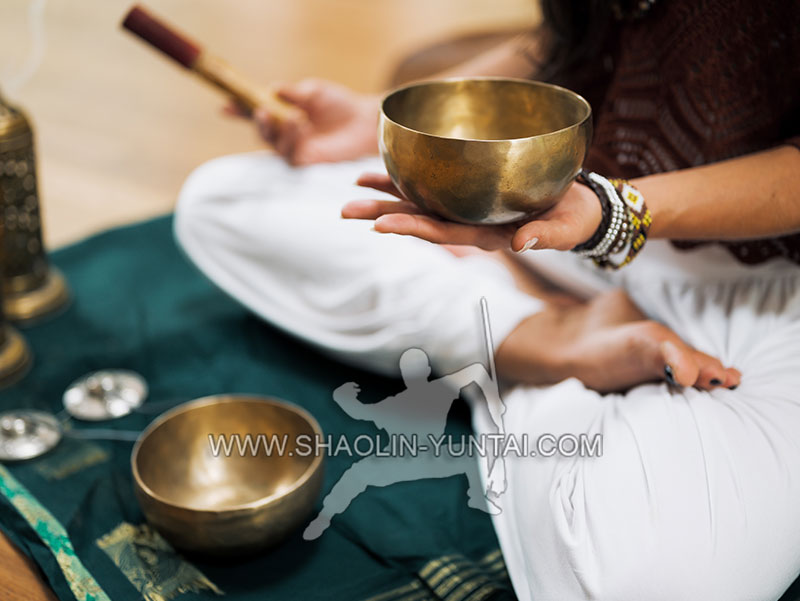
In Daoist meditation, Wu Zhi is not a technique but an attitude. It is not about stopping thoughts or achieving special states. Thoughts may arise as long as you do not follow them. This is where Wu Zhi becomes practical.
You sit still; a thought arises, maybe a memory or a plan. Normally, you engage, continue thinking, evaluate, react internally. Wu Zhi means noticing the thought and letting it go without pursuing it further—not out of discipline, but insight.
Gradually, a different quality of perception emerges. Bodily sensations become clearer, breathing calmer, surroundings more present. This state is not empty, but awake. Acting from Wu Zhi follows the natural movement of the situation and is a subtle unfolding of Zi Ran. Decisions ripen rather than being forced, appearing spontaneous, appropriate, and effortless. For a deeper dive into Zi Ran feel free to check out our article “Zi Ran – Naturalness, Spontaneity, and the Original Way“.
This also connects to Wu Wei: action without compulsion, effect without effort. For a deeper dive into Wu Wei in everyday life, you can read our article “Wu Wei: The Secret of Effortless Action“.

Applying Wu Zhi in Martial Arts and Training
A particularly clear example of Wu Zhi is found in martial arts. Beginners think about every movement: Where is the foot? How is the hand? What comes next? Advanced practitioners know the technique, but in the crucial moment, they must forget it.
A traditional teacher often says:
“If you think, you are too late.”
This is not anti-intellectualism, but a precise description of Wu Zhi. Technique is practiced until it no longer needs conscious control. In free practice or combat, the body reacts directly to what happens. Perception and action merge. Knowledge is fully integrated without blocking the mind. This is the lived interplay of Wu Zhi, Wu Wei, and Zi Ran: natural, spontaneous reaction without inner resistance.
The same applies in sports, dance, or crafts. Controlling every hand movement while writing disrupts flow. Checking every note while playing music disrupts music. When knowledge is embodied, action arises without internal friction. Less striving, more effect. The essence of Wu De is evident in this integrity.
Wu Zhi in Relationships and Conversations
In interpersonal contexts, Wu Zhi has a subtle but profound effect. In many conversations, people do not truly listen. They wait to contribute their knowledge, opinion, or experience. Wu Zhi means letting go of this inner urge for a moment.
In conflicts, this becomes especially clear. Those convinced of being right often close themselves to new information. Wu Zhi here does not mean giving up oneself but staying open. By not reacting immediately, the entire dynamic of a conversation often changes. New aspects emerge that were previously overlooked. From this attitude, Wu De develops—a credibility that is not forced but arises from character and lived practice. Additional examples of Wu De in everyday life can be found in our article on Wu De – The Art of the Warrior: Virtues for a Fulfilling Life.
Zhuangzi expresses this attitude when he says that the wise person does not cling to a single perspective. Truth emerges in the changing viewpoints, not in holding on.
Wu Zhi in an Information-Overloaded World
In an era of constant information availability, Wu Zhi appears almost radical. Information is omnipresent, opinions harden quickly, and uncertainty is seen as weakness. The Daoist idea of not-knowing consciously opposes this. It allows you to leave things open without immediate judgment.
Many decisions become clearer when the inner urge for certainty diminishes. Wu Zhi creates an interval where perception can mature. Not everything must be understood immediately to be appropriate. Acting, perceiving, and effect then follow the natural order—a subtle indication of Zi Ran and Wu Wei present in all areas of life. For a deeper understanding of Wu Wei in everyday life, see our article “Wu Wei: The Secret of Effortless Action“.



Letting go of prejudices opens the mind to what is.
Wu Zhi as a Lifelong Practice
Wu Zhi is not a state you achieve and then possess. It is a continuous practice of letting go. The mind repeatedly reaches for explanations, certainties, and identities. Wu Zhi means noticing this and gently returning to openness.
In Daoist terms, knowing, acting, and effect are not separate. When the mind does not cling to knowledge, action becomes more natural. And when action is natural, effect arises without being intended. Not-knowing thus becomes not a deficiency, but a source of wisdom, presence, and inner freedom. Simultaneously, lived virtue (Wu De) becomes visible, while everything arises from one’s own naturalness (Zi Ran), and action merges effortlessly with the principle of Wu Wei.
FAQ
What does Wu Zhi mean in Daoism?
Wu Zhi denotes the state of not-knowing, where the mind is free from fixed concepts and judgments.
Is Wu Zhi the same as ignorance?
No. Wu Zhi is the conscious release of fixed knowledge, not a lack of understanding.
How does Wu Zhi differ from Wu Wei?
Wu Zhi is the mental state; Wu Wei is the action arising from it. Wu Zhi creates the foundation for effortless action.
Can Wu Zhi be achieved through practice?
Not directly. Meditation, mindfulness, and physical practice create conditions in which Wu Zhi can be experienced.
How does Wu Zhi appear in martial arts?
Technique is applied not from deliberate knowledge, but from immediate perception. Movements are spontaneous, precise, and in tune with the moment.
Which virtues support Wu Zhi?
Inner calm (Qing Jing), simplicity (Pu), and natural effectiveness (De) foster the state of not-knowing.
Can Wu Zhi be lived in everyday life?
Yes. Decisions and actions arise from clear perception without fixed preconceptions.
How is Wu Zhi related to wisdom?
True wisdom arises when one recognizes the limits of thinking and prioritizes direct experience.
Does Wu Zhi mean passivity?
No. Wu Zhi is conscious presence, spontaneously and appropriately responding to situations.
What other Daoist “Wu” forms exist?
Wu Ming (without naming), Wu Yu (without excessive desire), Wu Xin (without inner craving), Wu Wei (action without compulsion). They open the mind and foster Wu Zhi.


Ich bin Wissenschaftler, Naturwissenschaftler, und als solcher kann ich Nicht-Wissen nicht durch Glauben ersetzen, sondern nur durch Streben nach mehr Wissen. Aber für mich ist Wissen nicht Selbstzweck, sondern der Schlüssel zum Verstehen, das ich gerne weitergebe und mit anderen teile, auch mit Freunden in China, mit denen ich in ständigem Austausch bin.
Im Text steht geschrieben „Wenn du denkst, bist du zu spät.“. Ich sage: “Du musst nicht nachdenken, Du musst vordenken (vorausdenken)”. Und um das zu können, muss man verstehen.
Hallo Gunther, danke für dein Feedback.
Als Wissenschaftler willst Du Nicht-Wissen nicht durch Glauben ersetzen – zu Recht. Im Daoismus ist Wu Zhi jedoch keine Absage an Erkenntnis. Nicht-Denken meint hier nicht Anti-Intellektualismus, sondern eine andere Priorität des Denkens.
„Wenn du denkst, bist du zu spät“ ist daher kein Denkverbot, sondern ein Hinweis darauf, dass begriffliches Denken oft erst im Nachhinein greift. Wu Zhi beschreibt ein Wahrnehmen und Verstehen, das dem Denken vorausgeht, ohne es auszuschliessen. Erst danach kann Denken seine volle Klarheit entfalten.
In diesem Sinn passt Dein Vordenken sehr gut: Verstehen entsteht nicht gegen das Denken, sondern bevor es sich festlegt.