


In China, respect is shown in small gestures: you give and receive things with both hands, you hold your glass a little lower when you clink, and you tap the table with two fingers when someone pours you tea. None of this is written on a sign, but Chinese people notice it, and they are delighted when a foreigner knows it. In this guide you find the most important rules of Chinese etiquette: greetings, table manners, toasting, tea, gifts, visits and the idea of «face», with the Chinese words and the reasons behind them. Most of them you will use every day during your stay at our school.
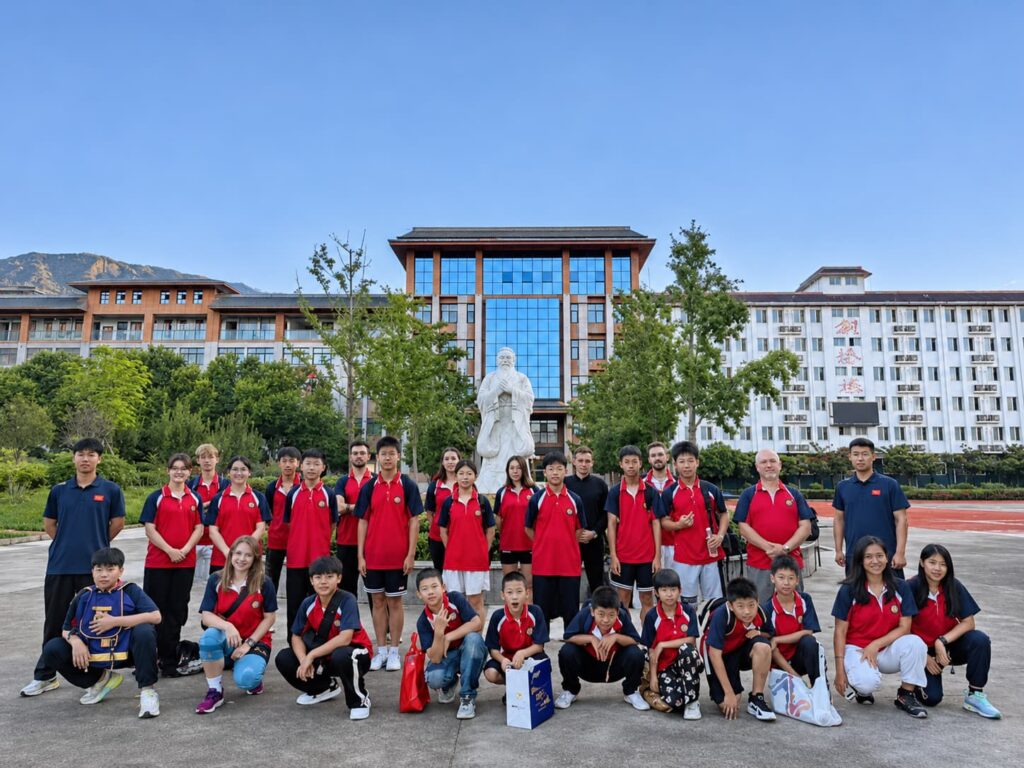
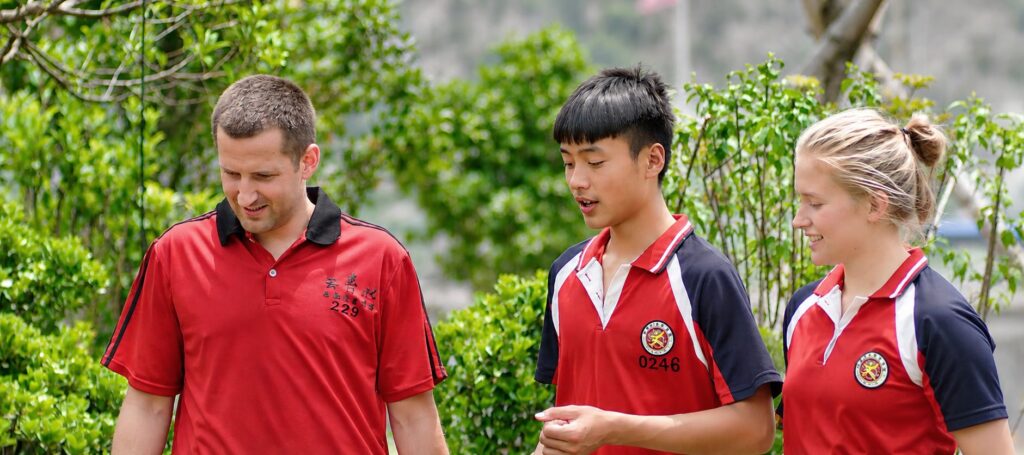
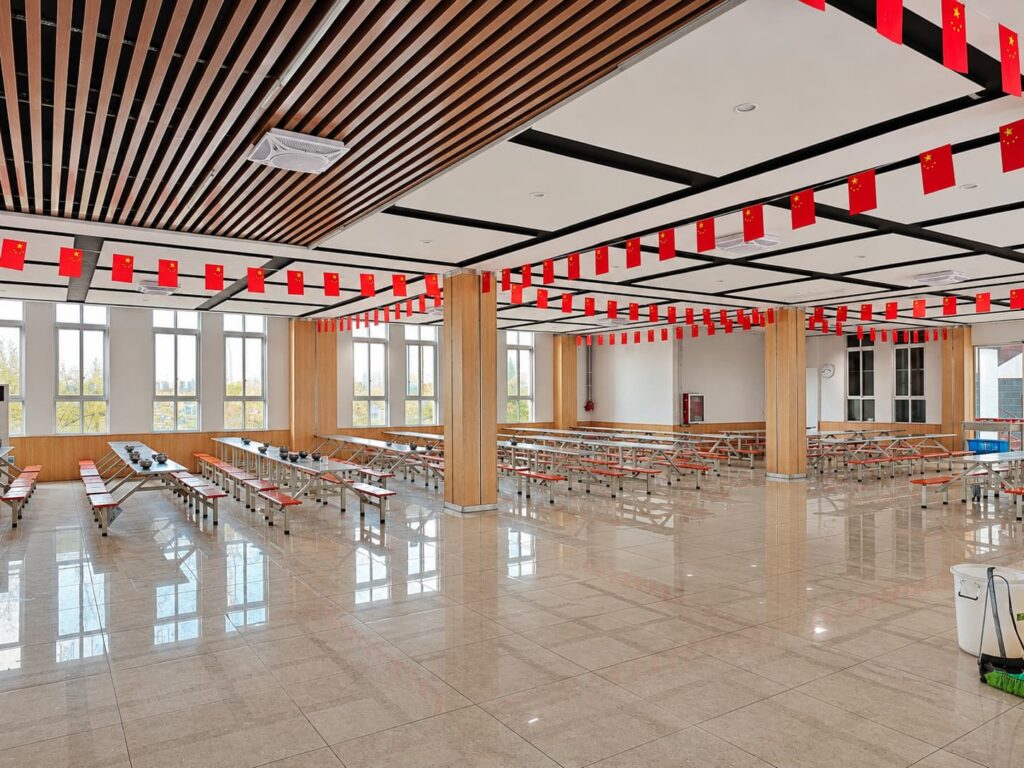
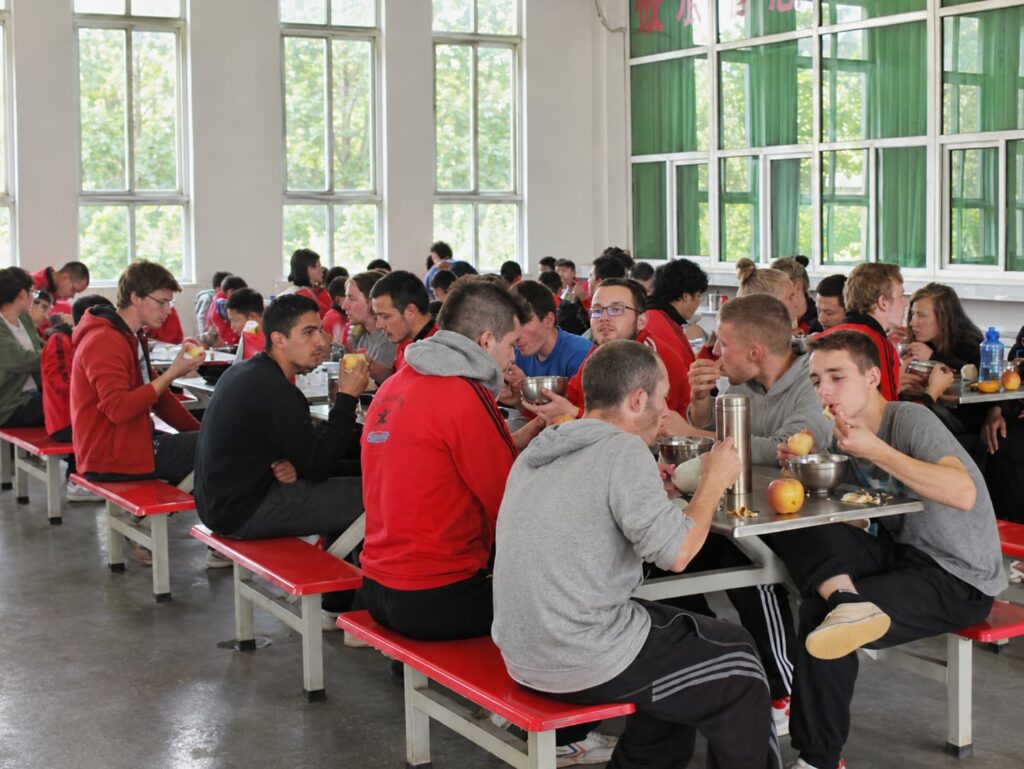


Everyday life at our school in China. Click a photo to enlarge.
Why etiquette matters in China
礼 (lǐ): respect shown through behaviour.
China is often called the «land of etiquette» (礼仪之邦, lǐyí zhī bāng). The idea goes back to Confucius, who taught that li (礼), proper conduct, keeps relationships between people in harmony. Two ideas from this tradition still shape daily life today:
- Respect for age and rank. Elders, teachers and hosts are served first, greeted first and given the best seat.
- Face (面子, miànzi). A person’s dignity and reputation in front of others. Good manners mean giving face to others and never making someone lose face.
The good news: nobody expects a foreigner to know every rule. Chinese people are patient and forgiving with guests. But every small gesture you get right is noticed and appreciated, and it opens doors. You can read more about the roots of these values in our articles on Confucianism and Wu De, the martial virtue.
Give and receive with both hands
The simplest and most important gesture.
If you remember only one rule, remember this one: give and receive things with both hands. It shows that you give the object, and the person, your full attention. It applies to:
- Money. When you pay at a counter or hand over cash, hold the notes with both hands.
- Business cards and documents. Hold the card at the top corners, with the text turned towards the other person. Look at a card you receive for a moment before putting it away; never put it straight into your back pocket.
- Gifts. Offer and accept a present with both hands.
- Cups and glasses. Accept a cup of tea or a glass from an elder or a teacher with both hands.
When you pass scissors or a knife, turn the blade towards yourself and the handle towards the other person.
Greetings and forms of address
Elders first, titles instead of first names.
How to greet
A handshake, a nod or a slight bow are all common. Handshakes are often lighter than in Europe or America, and that is not a sign of coldness. Greet the oldest or most senior person first. Say 你好 (nǐ hǎo), or more politely 您好 (nín hǎo) to an elder or teacher. Hugs and kisses on the cheek are unusual, especially with people you have just met.

How to address people
In China, the family name comes first: in «Wang Li», Wang is the family name. People are rarely addressed by their first name alone. Instead, the family name is combined with a title: 王老师 (Wáng lǎoshī, «teacher Wang»), 李先生 (Lǐ xiānsheng, «Mr Li»). A martial arts teacher is called 师父 (shīfu), often together with the family name, for example «Chen Shifu».
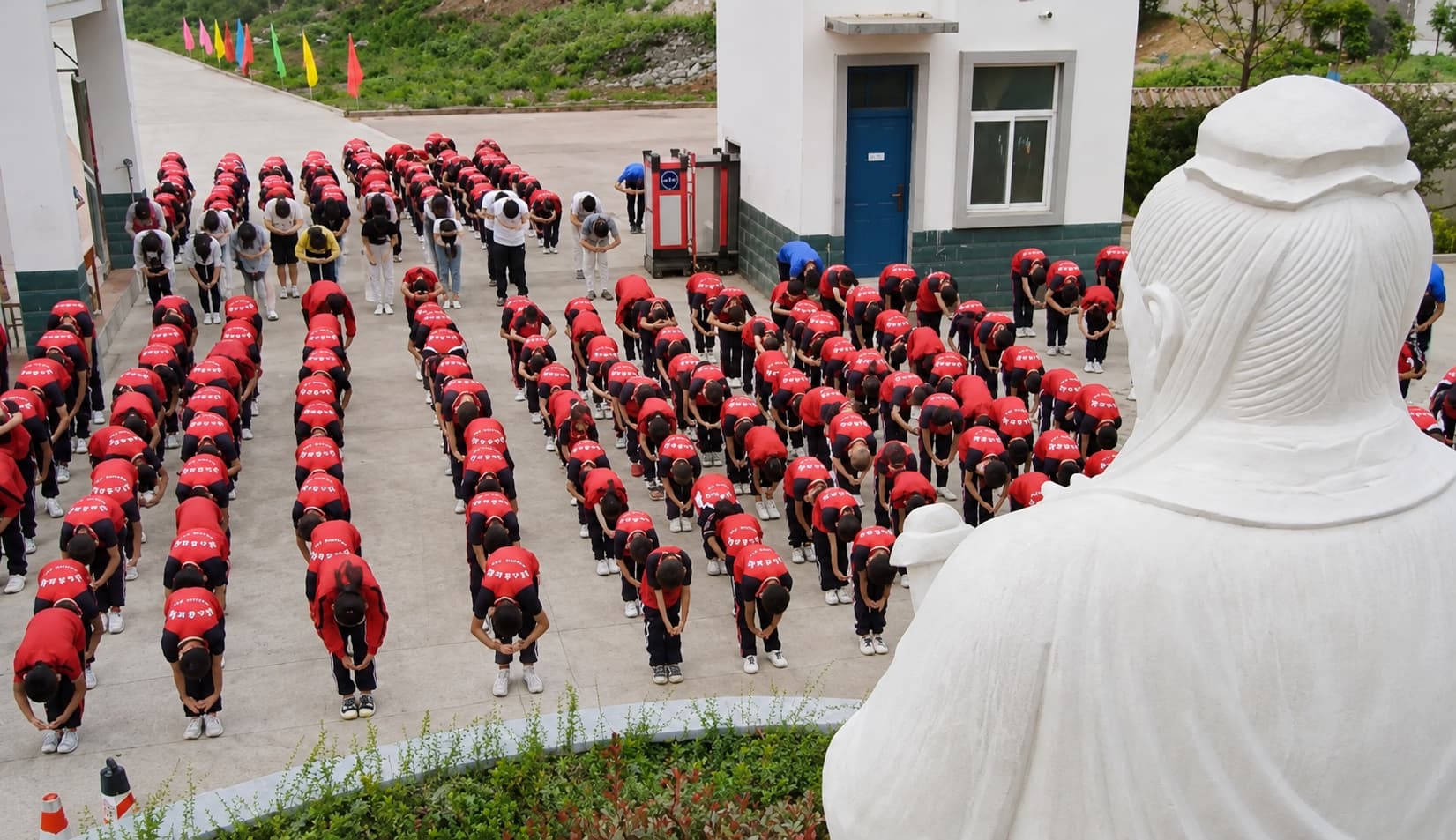
Among martial artists, the greeting is the fist-and-palm salute (抱拳礼): the right hand makes a fist, the open left hand covers it, both in front of the chest. At our school you use it at the start and end of every lesson. Everything about its meaning and the correct form is in our article on the Kung Fu salute.
Gestures and body language
Small movements with a big effect.
- Point with an open hand. Pointing at people with your index finger is rude. To show a direction or a person, use your open hand, palm up, fingers together.
- Beckon with the palm down. To call someone over, hold your hand out with the palm facing down and move your fingers towards you. Beckoning with one finger and the palm up is considered rude. The same gesture with the arm stretched out stops a taxi.
- Elders go first. Let older people go through the door first, offer them your seat on the bus and let them sit down before you.
- Mind your feet. Feet are considered the lowest part of the body. Don’t put them on a table or chair, and don’t point the soles of your feet at someone when you sit.
- Little touching. Apart from a handshake, people rarely touch strangers. Hugs and kisses in public are unusual, while friends of the same sex often walk arm in arm.
Table manners in China
Shared dishes, chopsticks and a few clear taboos.
In China, food is shared. Several dishes stand in the middle of the table, often on a turntable, and everyone takes a little from each. A few customs make a big difference:
- Wait to be seated. At a formal meal, the seat facing the door is the seat of honour, for the host or the most important guest. Let the host show you where to sit.
- Let the elders start. Wait until the host or the oldest person picks up their chopsticks before you start eating.
- Take from the side nearest to you. Don’t dig through a shared dish looking for the best piece. If there are serving chopsticks or spoons (公筷, gōngkuài), use them.
- Turn the turntable slowly, and check that nobody is taking food at that moment.
- Serve others. Putting a good piece of food on a guest’s plate is a sign of care. If someone does this for you, accept it with a thank-you.
- The bill. The host usually pays. Friendly arguments over who pays are part of the ritual; next time, it is your turn to invite.

Chopsticks: what not to do
- Never stick chopsticks upright in a bowl of rice: it looks like incense at a funeral.
- Don’t point at people with your chopsticks or wave them while talking.
- Don’t tap your bowl with them; this was the gesture of beggars.
- Don’t spear food with one chopstick or lick them.
- When you pause, lay them across your bowl or on the chopstick rest.
Good to know
Slurping noodles and soup is normal in China and not considered rude. Bones are often placed on the table next to your bowl or on a small plate. At a banquet, a host may order much more food than the guests can eat, because an empty table could suggest that there was not enough. At home and in everyday meals, however, wasting food is frowned upon: take only what you will eat.
When a whole fish is served, eat the top side first, then lift the bone away instead of turning the fish over. In coastal regions, turning a fish is said to bring bad luck to fishing boats, which could capsize.
Toasting etiquette
Why your glass should be a little lower.
Toasting is an important part of a Chinese meal, especially at festivals, celebrations and business dinners. These are the rules:
- Clink lower. When you clink glasses with an elder, a teacher or your host, hold the rim of your glass slightly lower than theirs. It means «I look up to you». Don’t be surprised if the other person tries to go even lower: it is a friendly contest of modesty.
- Use both hands. Hold your glass with your right hand and support it with your left fingertips under the glass.
- Stand up when you toast someone who is older or more senior, and look at them.
- 干杯 or 随意. Gānbēi (干杯) literally means «dry cup»: bottoms up. If you prefer to just take a sip, say suíyì (随意), «as you like». Nobody should feel pressured, and you can toast with tea or juice.
- Toast the most senior person first, and don’t drink alone during a formal meal; drinks are taken together during a toast.
- Refill others first. Keep an eye on your neighbours’ glasses and fill theirs before your own.
Tea etiquette
Pouring, thanking and the art of the half-full cup.
Pouring tea
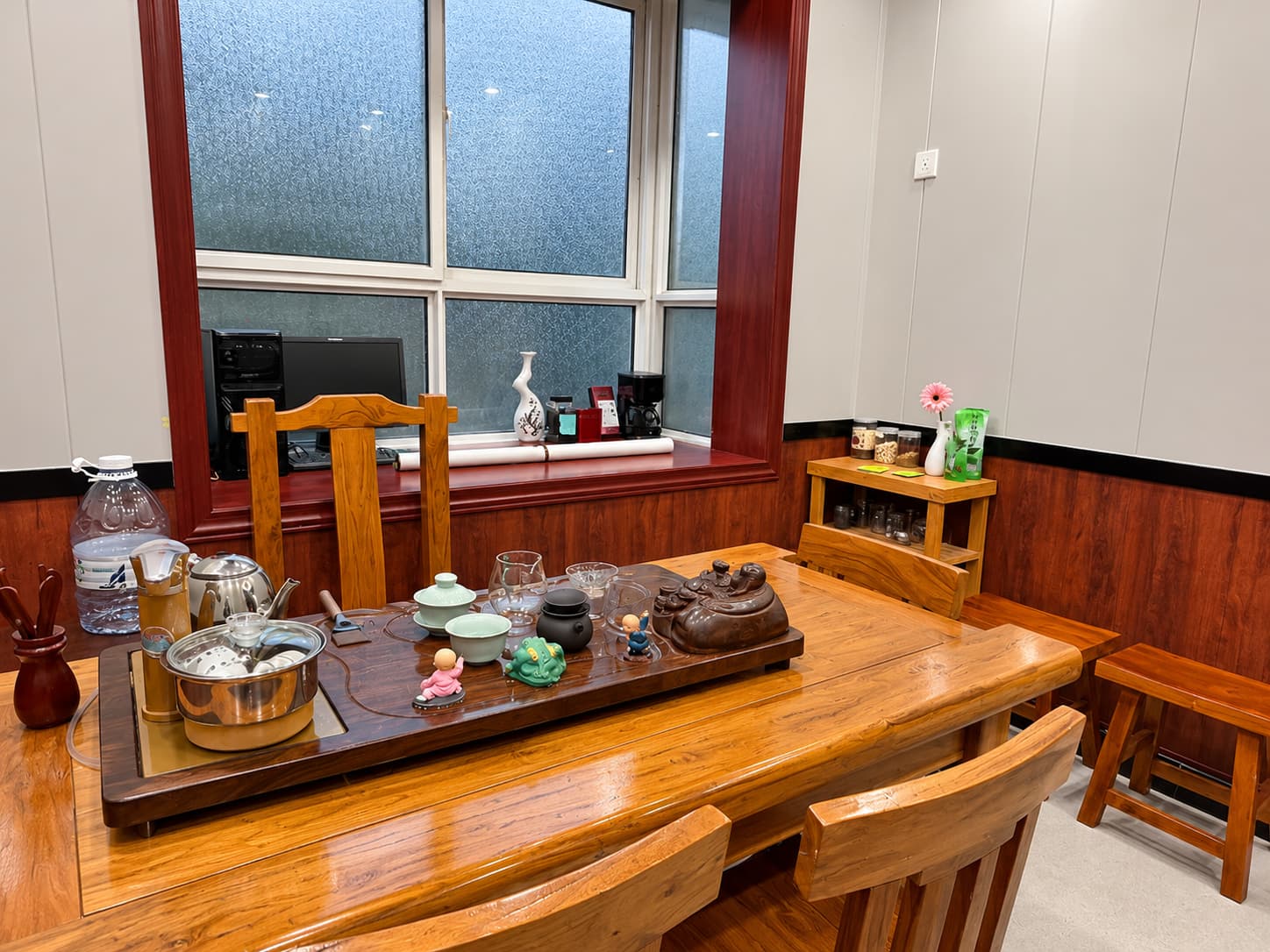
Pour tea for the others before yourself, starting with the eldest or most important person. Don’t fill the cup to the brim: an old saying goes 酒满敬人,茶满欺人, «a full glass of wine honours a guest, a full cup of tea insults him». Hot tea in a full cup is hard to hold, so about seven tenths is right. Make sure the spout of the teapot does not point at anyone.
Saying thank you without words
When someone pours tea for you, tap the table lightly two or three times with your bent index and middle finger, next to your cup. This is the 叩手礼 (kòushǒu lǐ), the finger-tap thank-you. It lets you say thanks without interrupting the conversation. It is very common in the south of China and in teahouses, and understood everywhere.
You can learn more in our cultural classes on the Chinese tea ceremony.
A popular legend explains the finger tap: the Qianlong Emperor (18th century) travelled in disguise and poured tea for his servant in a teahouse. The servant could not kneel and bow without revealing who the emperor was, so he bent two fingers like kneeling legs and tapped the table as a silent bow. Whether the story is true or not, the gesture has been a quiet «thank you» ever since.
Gifts and red envelopes
What to give, how to give it and what to avoid.
A small gift is always welcome, for example a specialty from your home country. The way you give it matters as much as the gift itself:
- Insist kindly. Many Chinese people politely refuse a gift once or twice before accepting it, to avoid looking greedy. Offer it again with a smile.
- Don’t expect it to be opened. Gifts are often put aside and opened later, not in front of the giver. If you receive a gift, you can do the same.
- Red is lucky. Wrap gifts in red or gold. White and black are associated with funerals.
- Pairs are good, four is not. Even numbers are considered lucky, the number four is not. More about this in the section on lucky and unlucky numbers.
- Red envelopes (红包, hóngbāo). At Chinese New Year and weddings, money is given in a red envelope, with new, clean notes and an even amount.
| Avoid as a gift | Why |
|---|---|
| Clock (钟, zhōng) | «Giving a clock» (送钟, sòng zhōng) sounds like «attending someone’s death» (送终). |
| Umbrella (伞, sǎn) | Sounds like «to break up» (散, sàn). |
| Pears (梨, lí) | Sounds like «separation» (离, lí); sharing a pear (分梨) sounds like «parting» (分离). |
| Knives and scissors | They symbolise cutting a relationship. |
| Shoes (鞋, xié) | Sound like «evil» (邪, xié) in some dialects; also «walking away». |
| White or yellow flowers | Used at funerals. |

Festivals
Festivals are the best time to experience these customs. At Chinese New Year people wish each other a good year, give red envelopes and eat dumplings together. At our school, students often make jiaozi together for the winter solstice (Dongzhi). The festival calendar of the school is on our page Life at school.
Red, white and the right ink
Red stands for luck and joy, which is why it is everywhere at festivals. But never write someone’s name in red ink: in the past, red ink was used for the names of the dead and of people sentenced to death. Use black or blue ink for cards and letters.
Lucky and unlucky numbers
Why 8 is loved, 4 is avoided and 250 is an insult.
In Chinese, many words sound alike. That is why numbers carry meanings: a number that sounds like «wealth» brings luck, a number that sounds like «death» is avoided. You will notice this everywhere: in prices, phone numbers, licence plates, wedding dates and red envelopes. The opening ceremony of the 2008 Olympic Games in Beijing started on 8 August 2008 at 8:08 pm, one of the luckiest moments imaginable.
| Number | Sounds like | Meaning |
|---|---|---|
| 8 八 (bā) | 发 (fā), as in 发财, «to get rich» | The luckiest number: wealth and success. Phone numbers and licence plates with many 8s are sold for high prices. |
| 6 六 (liù) | 流 (liú), «to flow» | Things go smoothly. 六六大顺 (liùliù dà shùn): «everything goes well». Popular in prices and online as «666», meaning «awesome». |
| 9 九 (jiǔ) | 久 (jiǔ), «long-lasting» | Long life and lasting love. Popular for weddings, for example 99 roses. |
| 2 二 (èr) | 好事成双, «good things come in pairs» | Even numbers are lucky, which is why gifts are given in pairs. |
| 4 四 (sì) | 死 (sǐ), «death» | The most unlucky number. Many buildings skip the 4th floor, and people avoid it in phone numbers and licence plates. |
| 250 二百五 | — | Means «idiot». Never give 250 yuan as a gift or call someone «er bai wu». |
| 520 五二零 | 我爱你 (wǒ ài nǐ), «I love you» | 20 May (5/20) is an unofficial Valentine’s Day in China. |
| 1314 | 一生一世, «for a whole lifetime» | Often combined with 520: «I love you for my whole life». |
| 168 | 一路发, «prosperity all the way» | A favourite for shop names, prices and phone numbers. |
Counting with one hand
In China you can count from 1 to 10 with one hand, which is very useful at the market. 1 to 5 look almost like in Europe, but 6 to 10 have their own signs:

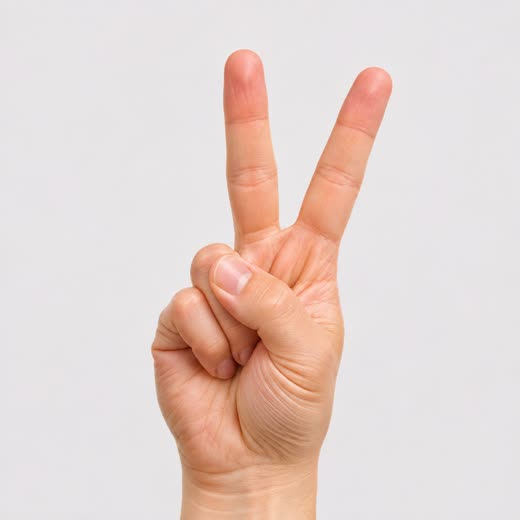


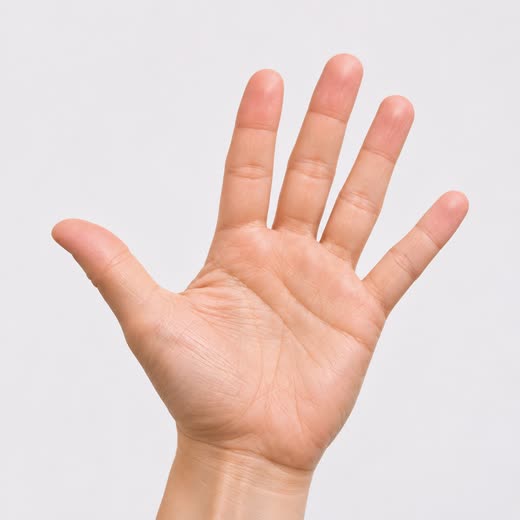
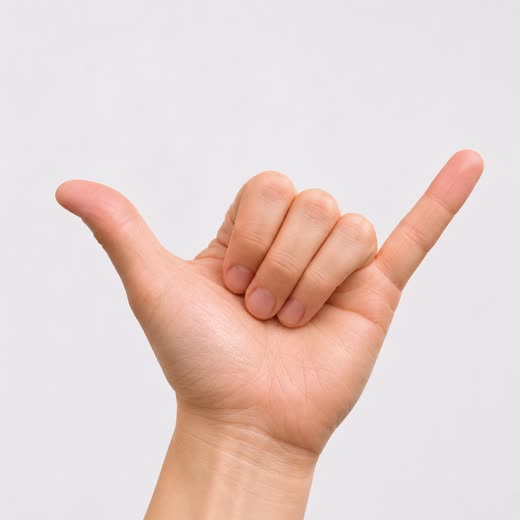
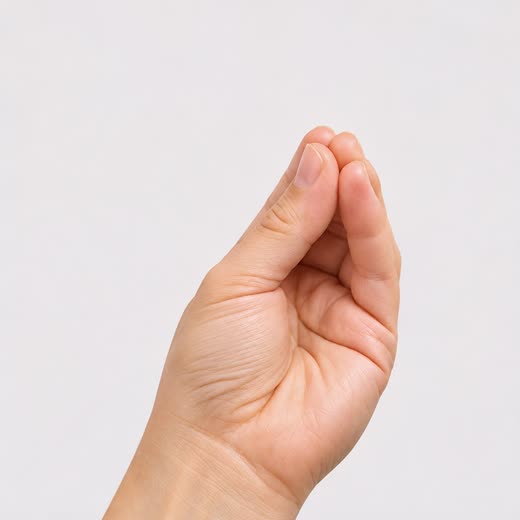


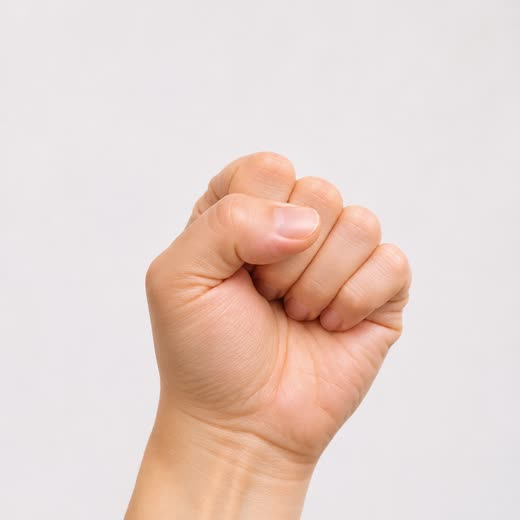
For 3, many Chinese raise the middle, ring and little finger. For 10, some people cross their two index fingers instead of making a fist, like the character 十.
What this means for you
Give money and gifts in even amounts, ideally with 6, 8 or 9: 88, 200 or 666 yuan are good amounts for a red envelope. Avoid any amount with a 4, and never 250. When you see a price like 88 or 168 in a shop, it was chosen on purpose. And if a Chinese friend writes «520» or «666» in a message, now you know what they mean.
Planning your stay?
Get our packing list and planning tips
The packing list as a PDF to tick off, plus tips on budget, visa and travel by email.
Face and modesty
Why Chinese people say «nali, nali» to a compliment.
Face (面子, miànzi) is a person’s dignity in the eyes of others. You give face with praise, respect and attention, and you make someone lose face with open criticism or by embarrassing them. In practice:
- Criticise privately. If something bothers you, talk about it calmly and in private, never in front of others.
- Expect modest answers. Praise is often answered with 哪里哪里 (nǎli nǎli, literally «where, where?»), meaning «oh, not at all». It is politeness, not disagreement. You can answer a compliment in the same way.
- A soft «no». Chinese people rarely say a direct «no». Phrases like «maybe», «we’ll see» or «it’s a bit difficult» (有点难, yǒudiǎn nán) often mean no.
- Don’t contradict elders directly. Disagreeing openly with an older person or a teacher, especially in front of others, is considered impolite. Ask a question or make a suggestion instead.
- Personal questions are a sign of interest. Don’t be surprised if people ask about your age, whether you are married, your job or even your salary, sometimes at the first meeting. It is friendly small talk, not curiosity. You don’t have to answer everything: a smile and a vague answer are fine.
- Stay calm. Raising your voice or showing anger in public makes you lose face, not the other person.
- Accept offers graciously. Hosts insist several times when they offer food or drinks. It is fine to decline once out of politeness and then accept.
«As a foreigner, you will find things that are done differently from in your country. What matters is to show respect and openness to local ways of doing things.»
Laura and Pierre, France · Read their report
Visiting a Chinese home
From the door to the goodbye.
- Bring something small. Fruit, tea, sweets or a specialty from your country.
- Take off your shoes. In many homes you change into slippers at the door. Watch what your host does.
- Greet the elders first, for example the grandparents, before the younger family members.
- Eat well. Your hosts will keep filling your bowl. Praise the food; it is the best compliment you can give.
- The goodbye. Hosts often accompany guests to the door, the lift or even the street (送客, sòngkè). The host says 慢走 (mànzǒu, «walk slowly», take care); you answer 请留步 (qǐng liúbù, «please, no need to see me out»).
Do’s and don’ts at a glance
The short version to remember.
| Do | Don’t |
|---|---|
| Give and receive with both hands | Toss things or hand them over with one hand to an elder |
| Greet the oldest person first | Call teachers or elders by their first name |
| Hold your glass lower when clinking | Push others to drink |
| Pour for others before yourself | Fill a teacup to the brim |
| Tap two fingers to thank for tea | Point the teapot spout at someone |
| Lay chopsticks across the bowl | Stick chopsticks upright in rice |
| Give gifts in pairs, wrapped in red | Give clocks, umbrellas, pears or sets of four |
| Point and beckon with an open hand, palm down to call someone | Point at people with your index finger |
| Let elders go first and offer them your seat | Take the seat of honour without being invited |
| Talk about problems in private | Criticise someone in front of others |
| See personal questions as interest | Turn a whole fish over at the table |
Chinese etiquette at our school
Where you will use it every day.
At our school in the Yuntai Mountains you live together with Chinese students and teachers, so these customs quickly become part of your day:
- In training. Every class starts and ends with the fist-and-palm salute to the Shifu. Your teachers are addressed as «Shifu» or «Laoshi», never by their first name.
- In the dining hall. Three meals a day are eaten with chopsticks in our dining hall. It is the perfect place to practise.
- In Chinese class. In the Mandarin lessons you learn the polite phrases from this article and how to use them.
- In the cultural classes. In the tea ceremony and calligraphy classes you experience Chinese etiquette up close.
- At festivals. Chinese New Year, the Mid-Autumn Festival and the Dragon Boat Festival are celebrated at the school, with food and traditions.
Don’t worry about making mistakes. Our teachers and Chinese students know that you are learning, and they will gladly show you how things are done. To prepare your stay, also read our guides Get ready for China and What to bring.
Polite phrases to learn
Ten words that open many doors.
| Chinese | Pinyin | Meaning |
|---|---|---|
| 您好 | nín hǎo | Hello (polite, to elders and teachers) |
| 谢谢 | xièxie | Thank you |
| 不客气 | bú kèqi | You’re welcome |
| 请 | qǐng | Please (when inviting someone) |
| 对不起 | duìbuqǐ | Sorry |
| 哪里哪里 | nǎli nǎli | Oh, not at all (answer to a compliment) |
| 干杯 | gānbēi | Cheers, bottoms up |
| 随意 | suíyì | As you like (drink as much as you want) |
| 辛苦了 | xīnkǔ le | Thank you for your hard work |
| 慢走 | mànzǒu | Take care (said to a leaving guest) |
Ready to start your training?
No deposit and no application fee. You only pay after you arrive at the school.
- Start any week
- Invitation letter for your visa
- Free pickup in Zhengzhou
FAQ: Chinese etiquette
Give and receive things with both hands, greet the oldest person first, address people with their family name and a title, let the host or elders start eating, hold your glass lower when clinking and never criticise someone in front of others.
Using both hands shows that you give the object and the person your full attention. It is a sign of respect, especially towards elders, teachers and guests, and is used for money, business cards, gifts and cups.
Holding the rim of your glass lower than the other person’s shows respect and modesty, as if to say «I look up to you». It is especially important with elders, teachers and hosts.
Tapping the table with two bent fingers is the 叩手礼, a silent way to say thank you. According to a popular legend, it goes back to a servant of the Qianlong Emperor, who used the gesture as a hidden bow.
Never stick them upright in rice, don’t point at people with them, don’t tap your bowl, don’t spear food and don’t dig through shared dishes. When you pause, lay them across your bowl or on the rest.
Avoid clocks, umbrellas, pears, knives, scissors, shoes, white or yellow flowers and anything in sets of four. Their names sound like unlucky words or they are linked to funerals or separation.
Refusing once or twice is a form of modesty, so as not to look greedy. The giver should kindly insist, and the gift is then accepted. It is also common not to open a gift in front of the giver.
The number 8 (八, bā) sounds like 发 (fā), as in 发财, «to get rich». It stands for wealth and success, which is why the Beijing Olympics opened on 8 August 2008 at 8:08 pm. The number 4 (四, sì), on the other hand, sounds like «death» and is avoided.
Face (面子) is a person’s dignity and reputation in front of others. You give face with praise and respect, and you avoid making someone lose face, for example by criticising them in public.
Use the family name with the title 老师 (lǎoshī), for example «Wang Laoshi». Martial arts teachers are called 师父 (shīfu), often with the family name, for example «Chen Shifu».
No. Slurping noodles and soup is normal in China and is not considered rude.
No. Nobody expects a foreigner to know everything. Our teachers and Chinese students are happy to show you. Learning a few gestures and phrases beforehand is a nice sign of respect and makes your first days easier.

